Toothpaste on Pimples: We Need to Talk
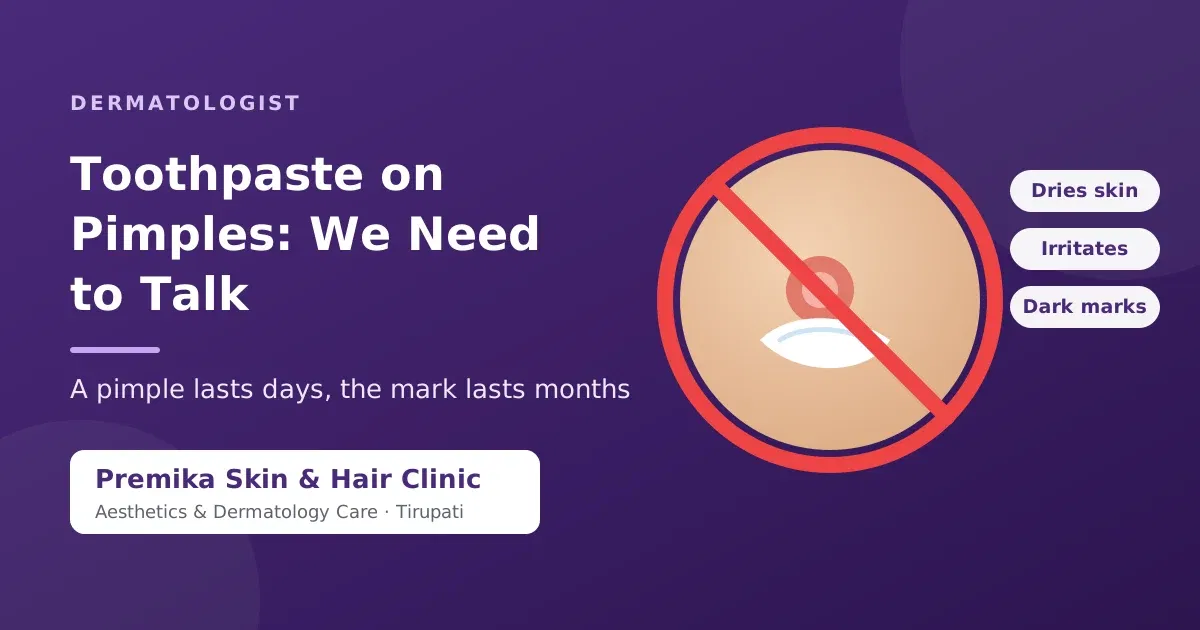
Toothpaste does not treat pimples. It dries and irritates the skin around them, and on many skin tones it leaves a dark mark that outlasts the pimple by months.
Why It Looks Like It Works
You have a function tomorrow, a pimple tonight, and a tube of toothpaste within reach. Almost every patient I see has tried it at least once.
The trick has a grain of logic. Toothpaste contains drying agents such as baking soda, alcohol and hydrogen peroxide, and menthol gives a cool tingle that feels like something is happening. By morning the spot can look flatter because the surface has dried out.
Older toothpastes also contained triclosan, an antibacterial, which is where much of the myth began. Most brands removed it years ago.
Drying a pimple is not the same as treating it. The clogged pore, the oil and the acne bacteria underneath are all still there.
What Toothpaste Actually Does to Your Skin
Toothpaste is made for tooth enamel, the hardest tissue in the body. Facial skin is thin, slightly acidic and far easier to injure.
- It disrupts the skin barrier. Toothpaste is alkaline and your skin is mildly acidic. That mismatch strips the protective layer and leaves the area raw.
- It irritates. Sodium lauryl sulphate, menthol, fluoride and flavouring agents commonly cause redness, burning and peeling. Some people develop a true allergic rash.
- It can burn. Left on overnight, whitening toothpastes in particular can cause a chemical burn.
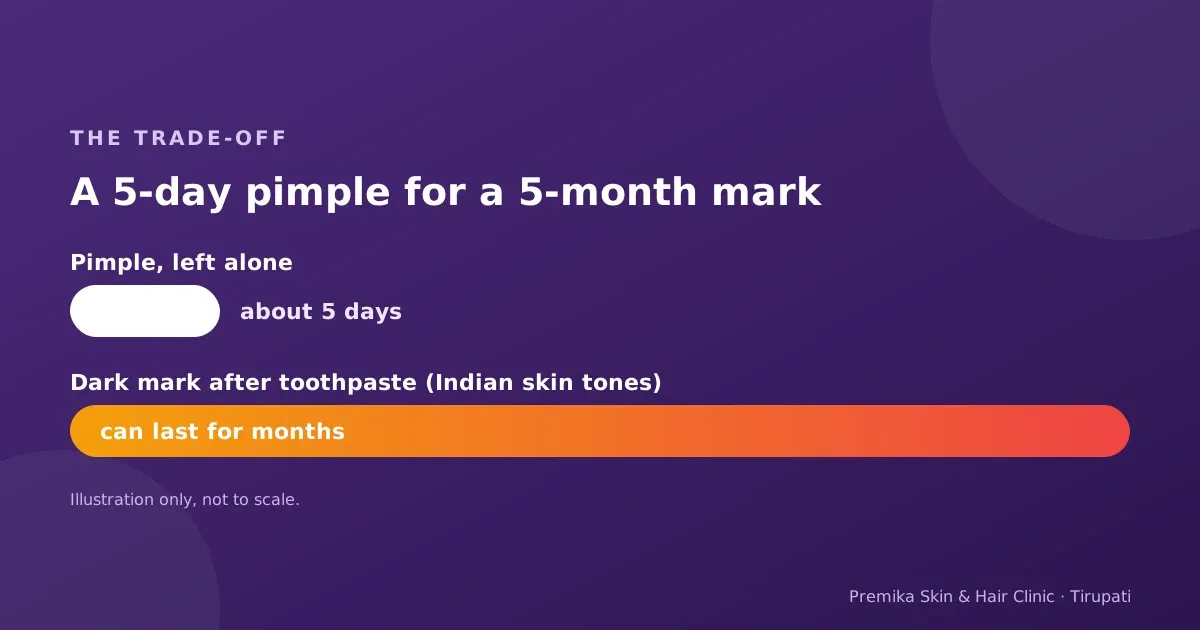
- It leaves dark marks. Irritated skin makes extra pigment. On Indian skin tones this post-inflammatory hyperpigmentation can last for months, long after the pimple would have healed on its own. Read more about pigmentation treatment.
- It can trigger more breakouts. Over-dried skin often responds by producing more oil.
In short, you trade a pimple that lasts five days for a patch that lasts five months.
What to Use Instead
These spot treatments are made for skin, sold at most pharmacies, and cost about the same as a tube of toothpaste.
| Option | What it does | How to use it |
|---|---|---|
| Benzoyl peroxide 2.5% gel | Kills acne bacteria | A thin dab on the spot at night. It can bleach pillowcases and towels. |
| Salicylic acid 1–2% | Unclogs the pore | A dab once or twice a day on the spot |
| Pimple (hydrocolloid) patch | Absorbs fluid and stops you picking | Apply on clean, dry skin and leave on overnight |
| Ice wrapped in a clean cloth | Calms swelling and pain | Hold on the spot for a minute or two |
← Swipe to see the full table →
Whatever you choose, three habits matter more than the product:
- Do not squeeze or pick. This is the most common cause of acne scars.
- Wash with a gentle cleanser twice a day and use a light, non-comedogenic moisturiser.
- Wear sunscreen every morning. Sun exposure darkens the marks that pimples leave behind. See how to choose the right sunscreen.
Try any new product on a small area first, and stop if it stings or peels heavily.
When to See a Dermatologist
A single pimple before an event rarely needs a doctor. Book a consultation if you notice any of these:
- Breakouts that keep returning or have not improved after 6 to 8 weeks of over-the-counter care
- Deep, painful lumps under the skin
- Pimples that leave dark marks or pitted scars
- Acne on the jawline that flares around your periods
- A burn, rash or dark patch from a home remedy, toothpaste included
Acne is a medical condition, and it responds well to treatment started early. The sooner it is controlled, the fewer marks and scars there are to treat later.
The Bottom Line
Keep the toothpaste for your teeth. If a pimple is bothering you, use a product made for skin, keep your hands off it, and see a dermatologist if it keeps coming back.
Acne that keeps coming back?
Book a consultation at Premika Skin & Hair Clinic, Tirupati, for a proper skin assessment and an acne plan that suits your skin.
Book a Consultation Call 80882 61834This article is for general awareness and is not a substitute for a personal consultation.