
Melasma vs Other Pigmentation: How to Tell the Difference
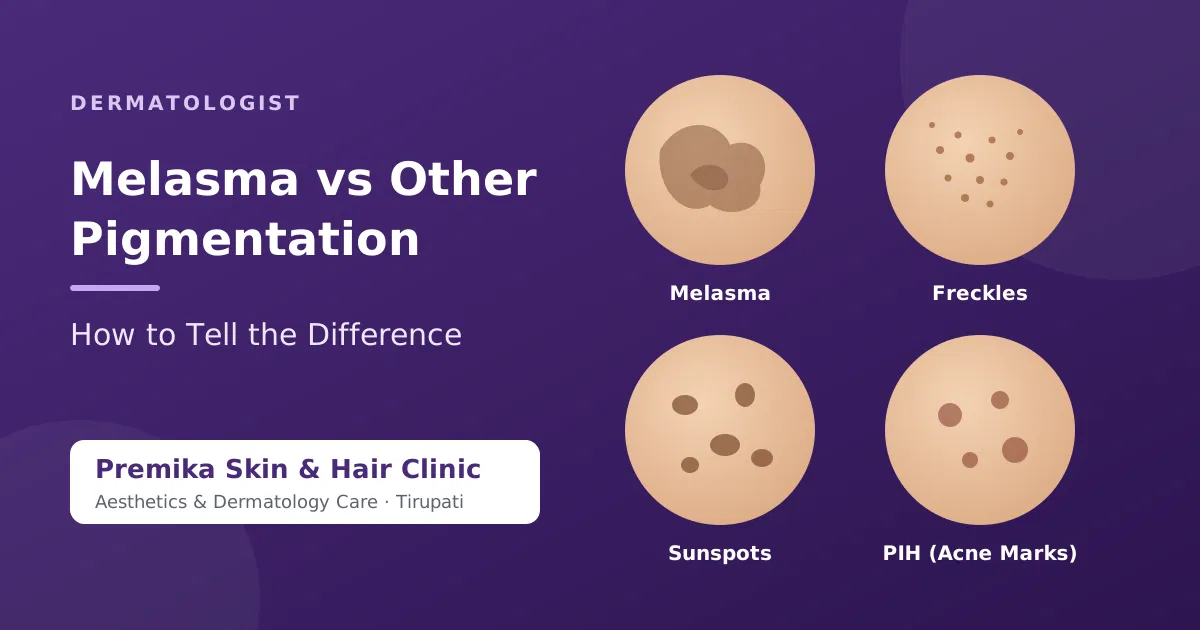
Not every dark patch on the face is melasma. Tanning, acne marks, sunspots, freckles and several other conditions can look similar, yet each has a different cause and responds to different treatment.
That is why the same "pigmentation cream" works for one person and fails, or even worsens things, for another. Knowing which type you have is the first step to clearing it. You can read more about pigmentation treatment in Tirupati on our services page.
What Is Melasma?
Melasma is a long-term pigmentation condition that causes brown or grey-brown patches on sun-exposed skin, almost always on the face. It is far more common in women and in Indian and other medium-to-dark skin tones.
How it looks
- Flat patches with irregular, map-like borders
- Usually on both sides of the face in a roughly matching pattern
- Common sites: cheeks, forehead, bridge of the nose, upper lip and jawline
- No itching, pain or scaling
What triggers it
- Sun exposure, including visible light and heat
- Hormonal changes: pregnancy, oral contraceptive pills, hormone therapy
- Family history
- Thyroid disorders in some people
- Irritating cosmetics, harsh scrubs and some medicines
Melasma is harmless, but it is stubborn. It tends to fade with treatment and return with sun exposure, so it needs long-term control and not a one-time cure.
Other Pigmentations Often Mistaken for Melasma
Post-inflammatory hyperpigmentation (PIH). Dark marks left behind after acne, a rash, a burn, an insect bite or an aggressive procedure. The mark sits exactly where the injury was, so its shape and position follow the original problem and are not symmetrical. It usually fades over months once the cause is controlled.
Sun tan. A diffuse, even darkening of all exposed skin, with a clear line where clothing begins. It fades in weeks with sun protection.
Freckles. Small, light-brown dots of 1 to 3 mm on the nose and cheeks, more common in fairer skin. They start in childhood, darken in summer and lighten in winter.
Sunspots (solar lentigines). Well-defined, round or oval brown spots on the face, hands and forearms. They appear after years of sun exposure, usually after the age of 40, and do not fade in winter.
Dark circles (periorbital pigmentation). Darkening limited to the skin around the eyes. Causes include genetics, rubbing, allergies, hollowing under the eyes and poor sleep.
Lichen planus pigmentosus. Slate-grey to bluish-brown patches on the face, neck and skin folds. The grey tone and spread to the neck help separate it from melasma. Some people report mild itching, and hair oils or fragrances are suspected triggers.
Acanthosis nigricans. Dark, thick, velvety skin on the neck, underarms and sometimes the forehead and temples. It is linked to insulin resistance, weight gain and PCOS, so it is a sign to check internal health.
Drug- or cosmetic-induced pigmentation. Certain medicines, fragrances, hair dyes and fairness creams can darken skin. Long-term misuse of hydroquinone or steroid creams can cause a hard-to-treat blue-black pigmentation called ochronosis.
Birthmark-type pigmentation. Conditions such as nevus of Ota and Hori's nevus cause blue-grey patches or dots on the cheeks. The pigment lies deep in the skin, so creams do not help and lasers are the usual treatment.
Quick Comparison
| Condition | Colour | Pattern and site | Main cause | Course |
|---|---|---|---|---|
| Melasma | Brown to grey-brown | Symmetrical patches on cheeks, forehead, nose, upper lip | Sun, hormones, genetics | Chronic, relapses with sun |
| PIH | Brown to dark brown | Exactly where acne, rash or injury occurred | Skin inflammation or injury | Fades over months |
| Sun tan | Even brown | All exposed skin, clothing line visible | Recent sun exposure | Fades in weeks |
| Freckles | Light brown | 1 to 3 mm dots on nose and cheeks | Genetics and sun | Darker in summer, lighter in winter |
| Sunspots | Brown | Well-defined spots on face and hands | Years of sun exposure | Permanent unless treated |
| Lichen planus pigmentosus | Slate-grey to blue-brown | Face, neck, skin folds | Inflammatory; triggers suspected | Slow, persistent |
| Acanthosis nigricans | Dark brown, velvety and thick | Neck, underarms, forehead | Insulin resistance, PCOS, weight gain | Improves when cause is treated |
← Swipe to see the full table →
How a Dermatologist Tells Them Apart
Diagnosis is mostly clinical: a dermatologist reads the colour, pattern, borders and location of the patches along with your history.
- History: pregnancy, pills, recent acne or rashes, sun habits, cosmetics, medicines, and family history
- Wood's lamp examination: shows whether pigment is superficial, deep or mixed, which predicts how well creams will work
- Dermoscopy: a magnified view of the pigment pattern that separates melasma from lichen planus pigmentosus, ochronosis and other look-alikes
- Blood tests: thyroid, blood sugar or hormone tests when the history points to an internal cause
- Skin biopsy: rarely needed, only when the diagnosis stays unclear
Two conditions can also exist together, for example melasma with acne marks, and each part needs its own plan.
Why Treatment Differs
Treatment follows the cause, so the right diagnosis decides the plan.
- Melasma: strict daily sun protection, prescription lightening creams used for a limited period, oral tranexamic acid in selected patients, and gentle chemical peels. Lasers are used cautiously, because aggressive lasers can worsen melasma in Indian skin.
- PIH: treat the underlying acne or rash first, then use sunscreen, lightening agents and peels. It usually responds well.
- Sun tan: sun protection and time; mild peels speed it up.
- Freckles and sunspots: respond well to lasers and spot treatments, unlike melasma.
- Lichen planus pigmentosus: anti-inflammatory treatment and avoiding suspected triggers; improvement is slow.
- Acanthosis nigricans: weight management and treating insulin resistance matter more than any cream.
- Deep birthmark-type pigmentation: Q-switched or pico lasers over several sessions.
What to Avoid
- Steroid-containing fairness creams and mixed "triple combination" creams bought without a prescription
- Using hydroquinone for many months without supervision
- Home remedies such as lemon juice, baking soda or toothpaste, which irritate skin and deepen pigmentation
- Harsh scrubbing, bleaching and frequent facials
Daily Care That Helps Every Type
- Use a broad-spectrum sunscreen of SPF 30 or higher every morning, indoors too. Tinted sunscreens with iron oxide also block visible light, which matters in melasma.
- Reapply every 3 hours when outdoors, and add a hat, umbrella or scarf.
- Keep your routine gentle: a mild cleanser, a moisturiser and sunscreen.
- Do not pick or squeeze pimples.
- Avoid heat on the face where possible, such as long hours near a stove or steam.
- Give treatment time. Most pigmentation needs 8 to 12 weeks to show visible improvement.
When to See a Dermatologist
- Patches that are spreading or getting darker despite sunscreen
- Pigmentation that appeared after starting a new cream, medicine or cosmetic
- Grey, blue or black discolouration
- Dark, thickened skin on the neck or underarms
- A single spot that changes in size, shape or colour, or bleeds
- No improvement after 2 to 3 months of over-the-counter products
Frequently Asked Questions
Can melasma be cured permanently?
It can be cleared or lightened well, but it tends to return with sun exposure or hormonal changes. Maintenance care and sunscreen keep it under control.
Will melasma go away after pregnancy?
It often lightens within a few months of delivery. If it persists, treatment can begin after discussing safe options, especially while breastfeeding.
Is laser the best treatment for pigmentation?
It depends on the type. Lasers work well for sunspots, freckles and deep birthmarks, but they are not the first choice for melasma. See our laser treatments page for more.
Do I need sunscreen indoors?
Yes. Light through windows and visible light from daylight can still trigger melasma.
The Takeaway
Pigmentation is not one condition. The pattern, colour and history point to the cause, and the cause decides the treatment.
Unsure what your dark patches are?
Book a consultation at Premika Skin & Hair Clinic, Tirupati, for a proper skin assessment and a treatment plan suited to your skin.
Book a Consultation Call 80882 61834This article is for general awareness and does not replace a consultation with a dermatologist.