Our skin is the largest organ of the body, acting as a protective barrier against infections, injuries, and environmental factors. When this barrier is compromised, various skin diseases can develop—ranging from mild irritations to chronic conditions requiring long-term care. An estimated 20–25% of the population is affected by chronic, non-communicable inflammatory skin diseases.
Skin diseases can arise from multiple factors, including:
Genetic predisposition – Family history of conditions like eczema or psoriasis
Immune system dysfunction – Autoimmune responses attacking skin cells
Environmental triggers – Allergens, irritants, weather changes
Infections – Bacterial, fungal, or viral pathogens invading the skin
Hormonal changes – Fluctuations affecting oil production and inflammation
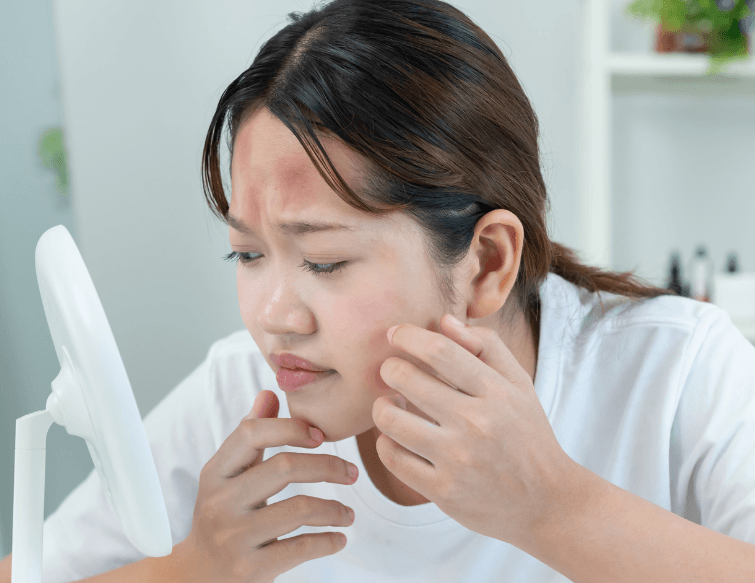
Eczema is a chronic inflammatory skin condition characterised by dry, itchy, red, and inflamed skin . It is one of the most prevalent inflammatory skin diseases, with both prevalence and incidence steadily increasing .
Causes: Genetic factors, allergies, irritants (soaps, detergents), and environmental triggers . The condition involves a complex interplay of genetics and environmental factors .
Treatment:
Moisturising creams and ointments
Steroid creams for inflammation
Avoiding triggers like harsh soaps and allergens
Advanced therapies including JAK inhibitors and biologics for severe cases
Psoriasis is an autoimmune disorder causing rapid skin cell growth, resulting in thick, red patches with silvery scales . The condition is driven by a complex interplay of genetics and environmental factors .
Causes: Autoimmune response causing rapid skin cell turnover. In some cases, may be associated with psoriatic arthritis causing joint pain .
Treatment:
Topical treatments (steroids, vitamin D creams)
Light therapy (phototherapy)
Oral or injectable medications for severe cases
Biologic agents targeting specific immune pathways
Vitiligo is an autoimmune condition characterised by white patches on the skin due to loss of pigment-producing cells (melanocytes) .
Causes: Autoimmune destruction of melanocytes. Studies show a strong association between vitiligo and other autoimmune conditions like alopecia areata .
Treatment:
Topical steroids or light therapy
Cosmetic cover-ups
Skin grafting in severe cases
Urticaria presents as red, itchy welts that appear suddenly on the skin . Chronic spontaneous urticaria (CSU) may be associated with other inflammatory skin conditions .
Causes: Allergic reactions to food, medications, or insect bites. In chronic cases, may be related to immune system dysfunction .
Treatment:
Antihistamines to reduce itching and swelling
Avoiding known triggers
In severe cases, biologic therapies like omalizumab or dupilumab
Fungal infections are very common in tropical climates like Tirupati, affecting the skin, hair, or nails . Fungi thrive in warm, moist environments and frequently colonise the skin surface .
Common Types:
Tinea Infections (Ringworm): Red, itchy, flaky rings that grow outward
Pityriasis Versicolor: Yeast-based infection causing white or brown flaky patches on the chest and back
Athlete's Foot: Fungal infection affecting the feet
Nail Fungus: Thickened, discoloured nails
Treatment:
Topical anti-fungal creams and washes
Oral anti-fungal medication for extensive infections or resistant cases
Keeping skin dry and clean
Bacterial infections occur when bacteria enter the skin through cuts, abrasions, or hair follicles . The main pathogenic bacteria are Staphylococcus and Streptococcus .
Common Types:
Abscesses (Boils): Deep, painful, warm swellings filled with pus
Cellulitis: Spreading red patches that feel warm to touch, may cause fever
Impetigo: Bacterial infection at the skin surface
Treatment:
Topical or oral antibiotics
For deeper abscesses, surgical drainage may be required
Surgical drainage usually required for deeper skin abscesses
Viral infections occur when a virus enters skin cells to replicate, creating distinct surface changes .
Common Types:
Viral Warts: Thickened skin, sometimes with tiny black dots, caused by HPV
Shingles (Herpes Zoster): Painful, blistering rash following a nerve pathway
Molluscum Contagiosum: Smooth, pearly, dome-shaped bumps, common in children
Cold Sores: Herpes simplex virus infection
Treatment:
Cryotherapy (freezing) for warts
Oral antiviral medication—critical to start within 72 hours for shingles
Electrosurgery or laser ablation for stubborn warts
Rosacea is an inflammatory skin disorder causing facial redness, visible blood vessels, and acne-like bumps . It often occurs alongside seborrheic dermatitis—studies show 26% of rosacea patients also have facial seborrheic dermatitis and 28% have scalp involvement .
Causes: Unknown, but triggers include spicy foods, alcohol, sunlight, and stress . Contributing factors may include fair skin types .
Treatment:
Topical or oral antibiotics
Laser therapy for visible blood vessels
Avoiding triggers and using gentle skincare
Seborrheic dermatitis is a common, chronic inflammatory skin disorder affecting areas where oil glands are prominent . The condition is not harmful but can be uncomfortable and unsightly .
Common Sites: Scalp, forehead, creases around the nose, inner eyebrows, and external ear canal .
Causes: Unknown, but contributing factors include abnormality of oil glands, yeast fungus, hormone fluctuations, stress, and winter weather .
Treatment:
Antifungal preparations—especially when occurring with rosacea, as steroids can worsen rosacea symptoms
Medicated anti-dandruff shampoos for scalp involvement
Contact dermatitis occurs when the skin comes into contact with an irritating substance or allergen. The risk of allergic contact dermatitis is increased in patients with atopic dermatitis, with studies showing 54.8% of AD patients had positive patch tests compared with 47.3% of non-AD patients .
Causes: Allergens (nickel, fragrances, preservatives) or irritants (soaps, detergents, chemicals).
Treatment:
Allergen avoidance remains the mainstay of therapy
Topical corticosteroids for inflammation
In severe cases, oral corticosteroids or systemic immunosuppressants
Dr. M S Premika is a qualified Aesthetic Dermatologist with MBBS and DDVL qualifications and 10 years of overall experience . Her comprehensive training enables accurate diagnosis and effective treatment of all skin conditions.
Many skin conditions share overlapping symptoms, making correct diagnosis challenging. Dr. Premika uses the latest diagnostic techniques to identify the root cause of your skin problem, enabling targeted, effective treatment .
Our treatments are grounded in the latest dermatological research. From topical medications to advanced therapies, we follow proven protocols to ensure the best outcomes.
Every patient receives a customised treatment plan based on their specific condition, skin type, and medical history. We understand that effective dermatology requires a tailored approach .
Patient safety and comfort are our top priorities. We provide clear explanations, answer all questions, and support you throughout your treatment journey.
From common conditions like acne and eczema to complex disorders like vitiligo and psoriasis, we offer complete dermatological care under one roof.
A dermatologist is a specialist with advanced training in diagnosing and treating skin, hair, and nail conditions. While a general physician can treat basic skin issues, a dermatologist provides expert care for complex conditions and offers advanced treatment options.
The most common skin conditions include acne, eczema (atopic dermatitis), psoriasis, fungal infections, warts, and rosacea. An estimated 20–25% of the population is affected by chronic inflammatory skin diseases.
Not all skin diseases are contagious. While infections (bacterial, fungal, viral) can be transmitted, conditions like eczema, psoriasis, and vitiligo are not contagious.
We offer expert, comprehensive dermatological care led by Dr. M S Premika, an experienced skin specialist in Tirupati. Our evidence-based approach, accurate diagnosis, and personalised treatment plans ensure the best outcomes for all skin conditions.
Chronic conditions like eczema, psoriasis, and rosacea require ongoing management with medication, lifestyle adjustments, and regular follow-up care. Identifying triggers and maintaining good skincare habits are essential for reducing flare-ups.
PREMIKA Skin and Hair Clinic, Aesthetics and Dermatology Care is located on Karakambadi Road, Tirupati. Led by Dr. M S Premika
First Floor, 22-2-159, Ur Karakambadi Road, near Reliance Digital, Road, Mangalam, Tirupati, Andhra Pradesh 517507
Copyright © 2026 | Premika Skin & Hair Clinic